
Neuro-Balance Therapy Review: What It Is, What It Costs and Where to Buy It
This is our independent review of Neuro-Balance Therapy, a $47 home program for adults over 50 who are afraid of falling: a balance-exercise DVD series and a small spiky ball for the sole of the foot. It explains what you get, checks the “sleeping foot nerve” claim against the fall-prevention research, and covers shipping, the offers after checkout and the 60-day refund rules. We are not the seller, and we earn a commission if you buy through our links; our full Neuro-Balance Therapy review has more detail.
- 60-day money-back guarantee
- Facts checked 29 October 2026
- Independent, not the seller
Neuro-Balance Therapy in 30 seconds
✅ Pros
- It is built around balance and lower-leg exercise, the kind of training with the strongest evidence for preventing falls in older people.
- Beginner, intermediate and advanced sequences you can follow at home.
- A one-time $47 payment, with a digital copy you can start straight away and a home-safety checklist.
- The seller gives a company name, a street address and a phone number.
❌ Cons
- The program itself has never been tested in a published study.
- Its central claim, that a “sleeping” foot nerve causes over 97% of falls and wakes up after 10 seconds with a spiky ball, has no source.
- The sales page warns against balance exercises and stability balls, and says the ritual has nothing to do with doctors or physical therapists.
- Shipping and handling are extra and not refunded, and you must post the DVD back at your own cost to get a refund.
- The presenter’s “certified balance specialist” title is not linked to any certifying body.
- A frightening opening story, crossed-out prices and promises of being fall-proof within minutes.
What it costs
Prices as shown on the official site on 29 October 2026; they can change.
The promise: fall-proof in 10 seconds
The sales page opens with the story of an older woman who falls behind her house at night and cannot get up in the cold. It then says the real cause of trips and falls is not age but a “sleeping nerve” in the foot, the deep peroneal nerve, which it blames for “over 97%” of falls in people over 60. Rolling a spiky ball under the foot for 10 seconds is said to wake the nerve and make your body “fall-proof within minutes”.
The idea is credited to a Harvard evolutionary biologist who studied barefoot walkers in Kenya. The page also says that fear of falling dropped by over 92% among about 100 people, that 112,000 people bought the program in four months, and that the physical therapy industry would like it taken down. None of these figures can be checked.
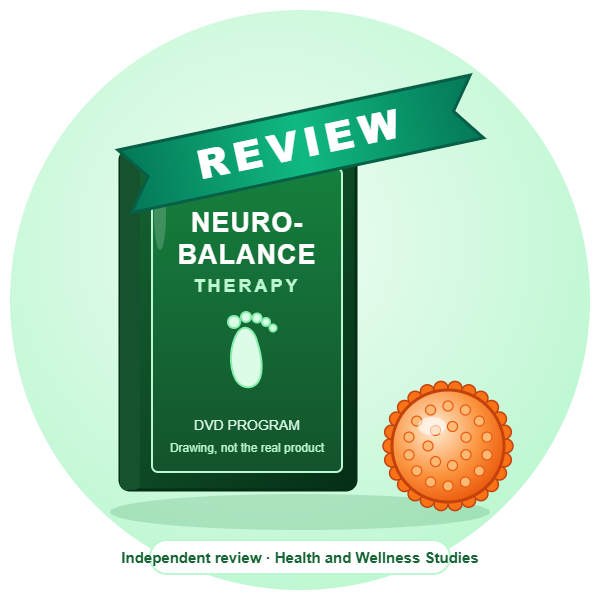
Illustrations by Health and Wellness Studies. The DVD case and ball in our cover image are drawings, not the real product.
What is in the package




The DVDs and ball come by post, which the seller says takes 3 to 10 business days, and you can start with the online videos and the manual immediately. The exercises themselves are not shown on the sales page before you buy.
The foot-nerve story, checked
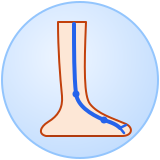
- What the nerve does: the deep peroneal nerve runs down the front of the shin and works the muscles that lift the foot and toes, and it gives feeling to the skin between the first two toes. Lifting the foot matters for clearing the ground when you walk.
- The 97% figure: no source is given, and none of the page’s references supports it. Falls in older people usually have several causes at once, such as weak legs, poor balance, some medicines, eyesight problems, dizziness and hazards at home.
- The Harvard study: published in Nature in 2019, it found that thick calluses on the feet of people who often walk barefoot, in Kenya and the US, protect the foot without dulling its sense of touch, unlike cushioned shoes. It did not study falls, older people, this nerve or massage balls.
- Stimulating the sole of the foot: studies of textured or vibrating insoles and of electrical stimulation are small and give mixed results. None shows that a few seconds of massage prevents falls.
What prevents falls, at a glance
The trials behind these figures had people exercising regularly for months, often two or three times a week. That is the part of the program most likely to help.
Balance exercise: the part that works
The sales page warns that overusing balance exercises and stability balls can make you more likely to fall. The research points the other way: in the 2019 Cochrane review of 108 trials, balance and functional exercises, practised standing, such as weight shifts, stepping and rising from a chair, cut the rate of falls by about a quarter, with high-certainty evidence. What matters is starting at a level that is safe for you and progressing gradually, which the program’s three levels allow.
Start with a falls check
The sales page says its routine has nothing to do with seeing a doctor or a physical therapist. We suggest the opposite: if you have fallen, feel unsteady or are afraid of falling, tell your doctor. A falls check can find causes that exercise alone will not fix:
- Medicines that cause dizziness or drowsiness, especially several together.
- Blood pressure that drops when you stand up.
- Eyesight, feet and footwear, including numbness from nerve damage.
- Bone health, to lower the risk of a fracture if you do fall.
Sudden unsteadiness, new numbness or dizzy spells need prompt medical advice. A physical therapist can then tailor exercises to you; in the US, Medicare Part B covers outpatient physical therapy when it is medically necessary.
Exercising safely at home
Free and low-cost ways to train balance
Exercise that prevents falls does not have to cost anything. Many community centres run strength-and-balance or tai chi classes for older adults, and the Otago exercise programme, developed in New Zealand for older people, is widely available free of charge. If you prefer a guided routine at home on screen, a program like this one is one option among many.
What you pay
The price is $47 plus shipping and handling, a one-time payment with no subscription; the shipping charge appears at checkout. The sales page shows crossed-out prices of $226, $197 and $97, which nobody pays. The seller tells affiliates that the average order is $106, more than twice the $47 price, so expect further offers after checkout; you can decline them.
Who is behind it
- The seller: Critical Bench, Inc., 15373 Roosevelt Blvd, Suite 203, Clearwater, Florida, phone 1-727-351-3065, with a help centre at criticalbenchhelp.zendesk.com.
- The presenter: Chris Wilson, described as a certified balance specialist, who says he is not a doctor. The page does not say which body certified him.
- The sales page: a video; a text version is at theneurobalancetherapy.org/transcript.
- Where else: the seller says it is not sold in shops or on Amazon, so a copy from a marketplace or a file-sharing site is not covered by the refund.
Is it worth $47?
If you want a guided balance routine on screen and will keep it up, $47 plus shipping is a reasonable price for a structured program, and exercise of this kind is well supported. Be clear about what you are buying, though: the program has never been tested, and the spiky-ball story is the least supported part. Our full Neuro-Balance Therapy review scores it 3.0 out of 5.
Before ordering, check that you can play DVDs or watch the videos online, and note the refund rules below: they are stricter than the sales page suggests.
How the 60-day refund works
- Post the DVD back at your own cost to the seller’s shipping company in McHenry, Illinois, so that it arrives within 60 days. Keep the tracking number.
- Request the refund through ClickBank’s order support at clkbank.com, choosing Refund Request.
- Shipping is not refunded: you get the purchase price back, not the original shipping and handling.
The sales page promises a refund “no questions asked”, but the written policy above is what applies. It counts the 60 days from delivery in one place and from purchase in another, so go by the purchase date.
👍 It may suit you if…
- You want a structured home balance routine you can follow on screen, at your own level.
- You will do the exercises several times a week for months, not just the 10-second ball routine.
- You have told your doctor about any falls or unsteadiness, or will do so.
⚠️ Skip it, or ask first, if…
- You have fallen recently, feel dizzy or have new numbness in your feet: see a doctor first.
- You expect a spiky ball to make you fall-proof within minutes.
- You would rather join a free community balance or tai chi class, or work with a physical therapist.
- You have no DVD player or computer, or nobody to help if you need support while exercising.
Before you buy
Online only, at theneurobalancetherapy.org, with ClickBank processing the order. This is our review page, not the official website.
A one-time payment on a ClickBank checkout page, with shipping added. Further offers appear after you pay; you can decline them.
$47 plus shipping and handling for the DVDs, the ball and online access.
60 days. The written policy needs the DVD posted back at your cost, and shipping is not refunded.
Questions people ask about Neuro-Balance Therapy
Is this the official Neuro-Balance Therapy website?
No. This is an independent Neuro-Balance Therapy review by Health and Wellness Studies, and we earn a commission on sales through our links. The program is sold at theneurobalancetherapy.org through ClickBank.
What is Neuro-Balance Therapy?
A $47 home exercise program for adults over 50 who fear falling: a DVD series of balance and lower-leg exercises at three levels, a small spiky foot ball, and online access to the videos, from Critical Bench, Inc.
Does Neuro-Balance Therapy work?
The program has never been tested. Balance and strength exercise does reduce falls in older people, by about a quarter in trials, so the exercises may help if you keep them up for months. The claim that a spiky ball makes you fall-proof has no support.
Is Neuro-Balance Therapy legit?
It is a real program sold through ClickBank by Critical Bench, Inc., a company with a street address and phone number in Florida. Its exercise approach is sensible; its foot-nerve claims are not supported by research.
What is the deep peroneal nerve?
A nerve that runs down the front of the shin and works the muscles that lift the foot and toes, and gives feeling between the first two toes. No evidence shows it causes 97% of falls or that a massage ball wakes it up.
What is the spike ball for?
You roll it under your foot while seated. It may feel pleasant, but no study shows that foot massage of this kind prevents falls.
Do I need a DVD player?
No. The DVDs work in a DVD player or a computer with a disc drive, and you also get online access to the videos straight after you order.
How long until the DVD arrives?
The seller says 3 to 10 business days, depending on where you live. You can start with the online videos in the meantime.
How much does Neuro-Balance Therapy cost?
$47 plus shipping and handling, a one-time payment. The seller tells affiliates the average order is $106, so expect further offers after checkout; you can decline them.
Is Neuro-Balance Therapy a subscription?
No. The sales page says it is a one-time payment with no recurring charges.
Is Neuro-Balance Therapy safe for seniors?
Gentle exercise is safe for most people. Start at the easiest level with a sturdy chair or counter to hold, and ask your doctor first if you have fallen recently, feel dizzy or have heart problems.
Can it replace physical therapy?
No. A physical therapist can assess you and tailor exercises, and a doctor can check medicines, blood pressure and eyesight. In the US, Medicare Part B covers outpatient physical therapy when it is medically necessary.
Who is Chris Wilson?
The presenter of the program, described as a certified balance specialist. He says he is not a doctor, and the page does not say which body certified him.
Is Neuro-Balance Therapy on Amazon?
The seller says it is only sold on its own page, through ClickBank. Copies from marketplaces or file-sharing sites are not from the seller and are not covered by the refund.
How does the Neuro-Balance Therapy refund work?
The written policy asks you to post the DVD back at your own cost to McHenry, Illinois, within 60 days, then request the refund at clkbank.com. Shipping and handling are not refunded.
Want the full picture?
Our Neuro-Balance Therapy review covers the label, the research, the sales claims and how we scored it.